Meo Vac
Meo Vac: The Edge of Vietnam
Meo Vac sits in Ha Giang Province at the far northeastern corner of Vietnam, where the country’s border wraps around Chinese territory on three sides. This remote district town serves as the midpoint on the Ha Giang Loop, positioned between Dong Van and the descent back toward Ha Giang city. But Meo Vac offers more than just a convenient overnight stop. It’s the gateway to Ma Pi Leng Pass and the Nho Que River gorge, which together create some of northern Vietnam’s most dramatic landscapes.
The Town
Meo Vac town is small, functional, and built on a steep hillside above the river. It exists primarily as a market town for surrounding ethnic minority communities (primarily Hmong) who come to trade livestock, produce, and goods.
There’s no tourism polish here. The buildings are basic concrete, the streets are narrow and steep, and infrastructure is minimal. But that rawness is part of the appeal. You’re in a genuine frontier town that happens to see tourists passing through rather than a place designed for tourism.
The Sunday market draws minority groups from mountain villages for kilometers around. Livestock trading dominates: horses, buffalo, pigs, chickens. The atmosphere is chaotic, muddy, and authentically commercial. This is real trading, not performance.
If you’re in Meo Vac on Sunday, the market is worth seeing early morning (around 6:00-7:00 AM when trading peaks). By mid-morning, it winds down. Outside Sunday, the town is quiet.
Ma Pi Leng Pass
The road between Dong Van and Meo Vac crosses Ma Pi Leng Pass, one of Vietnam’s most spectacular and intimidating mountain roads. This is the Ha Giang Loop’s highlight, the section that justifies the entire journey.
The pass traverses a cliff face roughly 2,000 meters above the Nho Que River. The road was hand-carved into the mountainside in the 1960s by ethnic minority soldiers. Construction took years and cost hundreds of lives. The engineering is audacious: narrow shelf road, no barriers in many sections, sheer drops directly beside the pavement.
Riding or driving Ma Pi Leng demands complete attention. The exposure is severe. The road surface varies from decent pavement to broken sections with gravel and potholes. Oncoming vehicles require careful navigation on the narrow road. Weather can change rapidly, bringing fog or rain that reduces visibility dramatically.
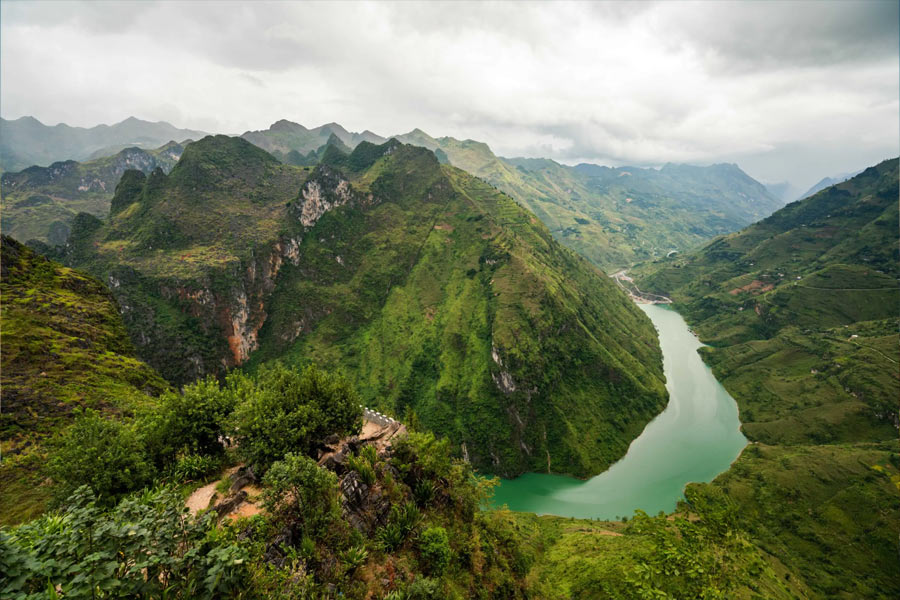
But the views are extraordinary. The Nho Que River cuts through the gorge far below, turquoise against grey limestone. Mountains fold into the distance toward China. The scale is overwhelming.
Multiple viewpoints allow safe stops for photos. The main viewpoint now includes a glass skywalk jutting out from the cliff. It’s tacky and unnecessary, but the natural views remain spectacular regardless.
Riding Ma Pi Leng requires confidence on motorbikes. If you’re uncertain about your skills, hire an easy rider (local driver with pillion seat) or arrange a car. The road is genuinely dangerous for inexperienced riders.
Nho Que River
The turquoise river visible from Ma Pi Leng Pass can be accessed at river level from Meo Vac town. Boat operators offer trips through the gorge, looking up at the cliff road you rode earlier.
The boats are small wooden vessels with outboard motors. Life jackets are provided. The trip lasts 30-45 minutes, traveling several kilometers into the gorge and back.
The perspective from river level is completely different from the pass. The cliff walls rise vertically on both sides. The road appears impossibly high and exposed from below. The water color is striking: bright turquoise caused by minerals from limestone erosion.
Boat trips cost around 50,000-100,000 VND per person depending on group size and negotiation. They operate daily when weather permits, typically starting around 8:00 AM.
Some operators combine the boat trip with stops at riverside settlements where minority families live in houses built into the cliff base. These visits feel somewhat staged but show how communities adapt to extreme geography.
Surrounding Areas
The road from Meo Vac toward Bao Lac and Cao Bang Province (continuing the loop back toward Ha Giang city) is less famous than Ma Pi Leng but equally scenic. It descends through multiple switchbacks offering new perspectives on karst mountains and valleys.
Several minority villages scatter around Meo Vac. Visiting requires sensitivity and ideally a guide with local relationships. These communities maintain traditional practices but tourism is increasing their awareness and slowly changing dynamics.
Hmong indigo dying and textile production continue in some villages. Women still create traditional clothing using techniques passed through generations. Some families welcome visitors to observe the process.
Where to Stay
Accommodation in Meo Vac is basic. Don’t expect comfort or amenities. You’re staying in a remote mountain town with limited electricity and hot water that’s sometimes unreliable.
Auberge de la Montagne is the most established guesthouse, run by a French-Vietnamese couple. Rooms are simple but clean, the restaurant serves decent food, and the owners speak English and French. It’s popular with independent travelers on the loop.
Meo Vac Sunshine Hotel offers slightly more modern rooms with private bathrooms and sometimes hot water. It’s adequate but unremarkable.
Several family-run guesthouses provide even more basic accommodation at lower prices. Conditions vary significantly. Inspect rooms before committing if possible.
Most lodging includes dinner and breakfast. The food is simple: rice, vegetables, meat or fish, soup. Quality is acceptable, portions are generous, and options are limited anyway.
Practical Considerations
Meo Vac has limited services. There’s no ATM (bring sufficient cash from Ha Giang city or Dong Van). Phone coverage is unreliable. WiFi exists in some guesthouses but don’t expect fast or consistent connection.
The town has a small hospital for emergencies, but serious medical issues require evacuation to larger cities hours away.
Petrol stations exist but fuel quality can be questionable. Fill up in Dong Van if possible before riding to Meo Vac.
Weather in the mountains changes rapidly. Even if it’s clear at town level, the pass can be foggy. Rain makes the roads treacherous. Landslides occasionally close sections temporarily during heavy rain.
Getting There
Meo Vac sits roughly 100 kilometers from Ha Giang city via Dong Van, or about 80 kilometers via the direct southern route through Bao Lac. Most travelers doing the loop arrive from Dong Van (having spent the previous night there) and depart the next day continuing the circuit.
From Dong Van: 30-40 kilometers, roughly 2-3 hours by motorbike including stops at Ma Pi Leng Pass viewpoints. The distance is short but the road demands slow speeds and frequent stops for photos.
The ride is spectacular but exhausting. Full concentration is required for the technical sections. Factor in time for breaks.
When to Go
September through November is peak season. Weather is relatively dry, visibility is generally good (though never guaranteed in mountains), and buckwheat flowers bloom in October, covering hillsides pink.
December through February is cold. Temperatures can drop near freezing, especially at pass elevations. Fog and clouds are common, limiting visibility. But you’ll encounter very few other travelers.
March through May brings spring: improving weather, flowers blooming, and increasing numbers of riders starting the loop.
June through August is wet season. Heavy rain, fog, and slippery roads make riding dangerous. Visibility is often poor. Landslides are more frequent. We generally advise against the Ha Giang Loop during these months unless you’re experienced with difficult conditions and flexible with timing.
Planning Your Time
Most travelers spend one night in Meo Vac as part of the 3-4 day Ha Giang Loop.
Typical pattern: Ride from Dong Van in the morning, crossing Ma Pi Leng Pass with stops for photos and the gorge views. Arrive Meo Vac early afternoon. Take the boat trip on Nho Que River. Explore the town. Stay overnight. Depart next morning continuing the loop toward Du Gia and Ha Giang city.
Some riders add a second night in Meo Vac to explore surrounding villages or simply rest after the demanding ride. This makes sense if you’re not rushed and want to slow the pace.
The Reality
Meo Vac itself isn’t particularly interesting beyond the Sunday market. The accommodation is basic, the food is simple, and there’s nothing to do in town after dark.
But Meo Vac’s location makes it essential. It puts you at the base of Ma Pi Leng Pass and provides access to the Nho Que River gorge. These are the Ha Giang Loop’s most spectacular sections, the landscapes that justify the entire journey.
We send clients on the Ha Giang Loop understanding that places like Meo Vac require accepting basic conditions. You’re not going for comfort or services. You’re going for access to landscapes and experiences unavailable anywhere else in Vietnam.
The ride to Meo Vac from Dong Van is genuinely challenging. Ma Pi Leng Pass isn’t for casual riders or those uncomfortable with exposure. If you have any doubt about your abilities, hire an easy rider or arrange a car. The views are worth seeing, but not at the cost of an accident.
For travelers willing to commit to difficult riding, basic accommodation, and remote locations, Meo Vac delivers access to Vietnam’s most dramatic northern landscapes. Just make sure you understand what you’re signing up for before you head into the mountains.
TOURS INCLUDE Meo Vac

 10 DAYS

OTHER DESTINATIONS







What customers say about us
VIDEO TESTIMONIALS
Robert
 ITALY
ITALY
 2019
2019
 REQUEST A FREE QUOTE