Mekong Delta
Mekong Delta: Vietnam’s Liquid Landscape
The Mekong Delta spreads across 40,000 square kilometers in southern Vietnam, where the river splits into nine tributaries before reaching the sea. This is where Vietnam produces half its rice, most of its fruit, and sustains 18 million people on rivers, canals, and narrow strips of land between waterways.
Understanding the Delta
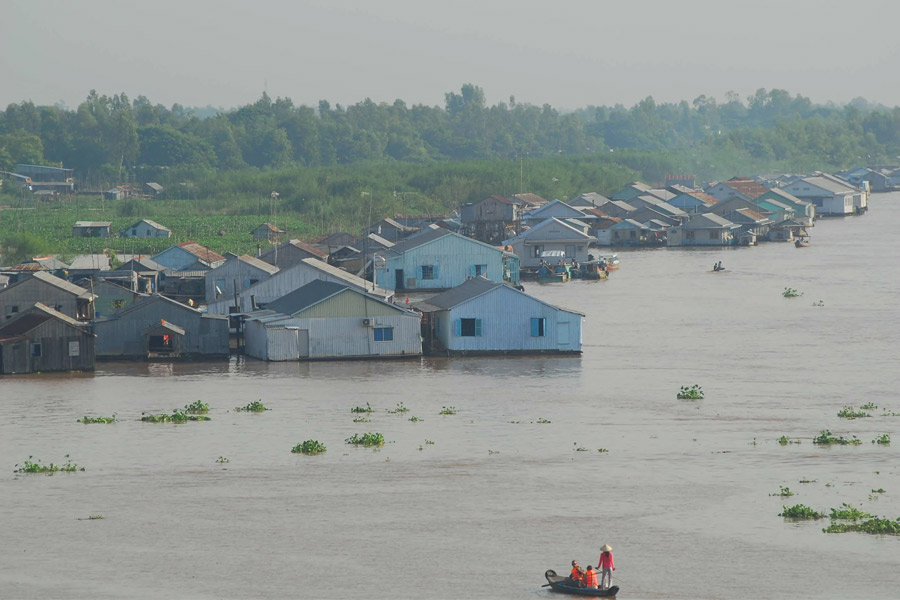
Water defines everything here. Houses on stilts, floating markets, boats as essential as motorbikes elsewhere. The landscape is completely flat, carved by centuries of river flow and human engineering. Canals connect villages, orchards line the banks, and the pace follows the river’s rhythm rather than city time.
This isn’t pristine wilderness. It’s a working landscape where people have shaped the environment for generations. What makes it compelling is watching how life adapts to water, how communities function when roads are secondary to rivers.
The Floating Markets
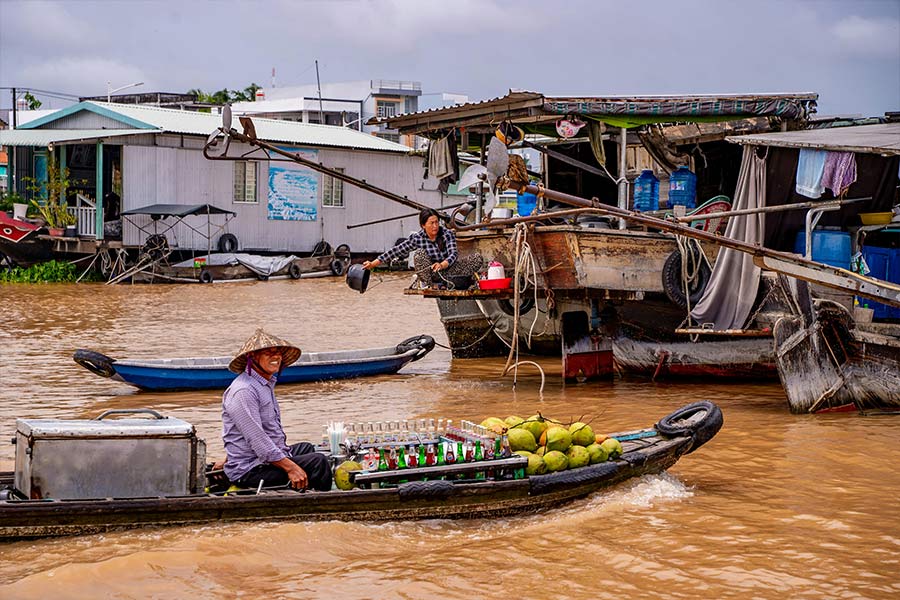
Cai Rang near Can Tho is the largest and most authentic floating market still operating. Wholesalers sell fruit and vegetables from boats, hanging samples from tall poles so buyers can see what’s available from a distance. The best time is 6:00-8:00 AM when trading peaks.
Phong Dien is smaller and sees fewer tourists. It’s further from Can Tho (30 kilometers) but feels more genuine. Local boats outnumber tourist boats significantly.
Cai Be floating market has declined substantially. It’s now more of a tourist market on the riverbank than an actual floating market. Skip it unless you’re already nearby.
Markets operate daily but are busiest early morning. By 9:00 AM, most wholesale trading finishes and boats disperse.
What to See and Do
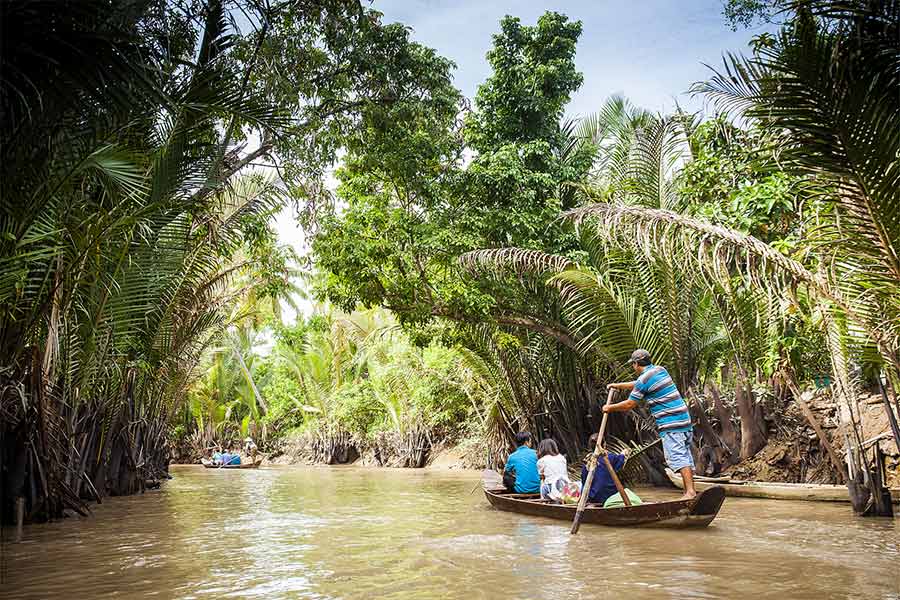
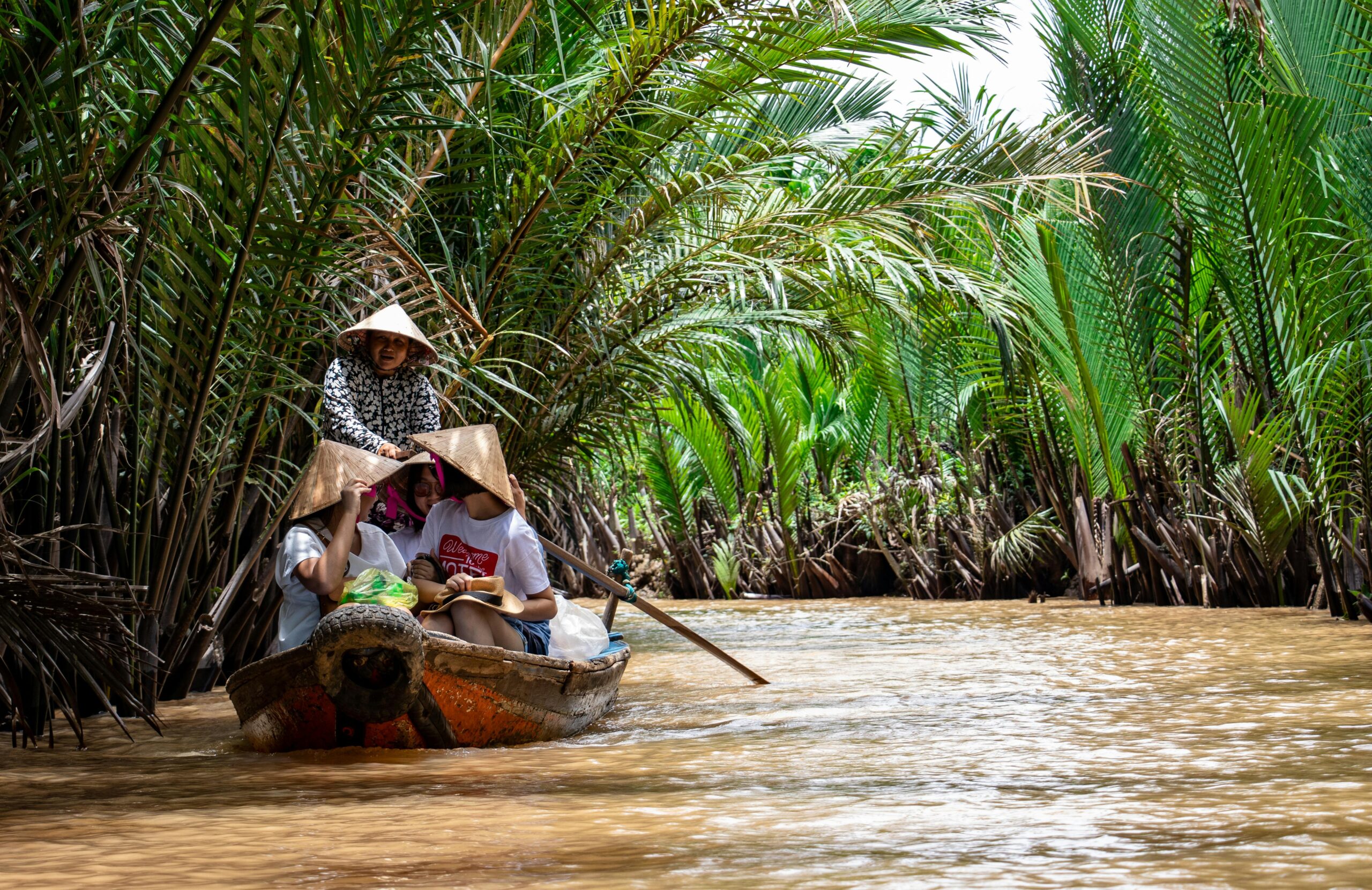
Canal exploration by small boat reveals delta life better than any main river trip. You’ll pass orchards, brick kilns, fish farms, and houses where families wave from their porches. These narrow waterways show how people actually live.
Visit fruit orchards and sample whatever’s in season: longan, rambutan, mangosteen, dragon fruit, pomelo. Many orchards welcome visitors and offer fresh fruit with honey tea.
Cycling through villages and along canal paths works well. The delta is flat, traffic is manageable on smaller roads, and you cover more ground than on foot. Several tour operators offer proper cycling tours with quality bikes.
Vinh Trang Pagoda near My Tho blends Vietnamese, Chinese, and Khmer architecture. It’s ornate, colorful, and genuinely important to local Buddhists.
Tra Su Cajuput Forest in An Giang province offers a different landscape: flooded forest, bird colonies, and boat routes through green tunnels. It’s several hours from Can Tho but worth it for nature-focused travelers.
Where to Stay
Can Tho is the logical base. It’s the delta’s largest city, has the best infrastructure, and puts you closest to Cai Rang market.
Azerai Can Tho sits right on the riverbank in the old town. Former colonial building, beautifully restored, excellent restaurant, rooftop bar with river views. The best hotel in the delta by considerable margin.
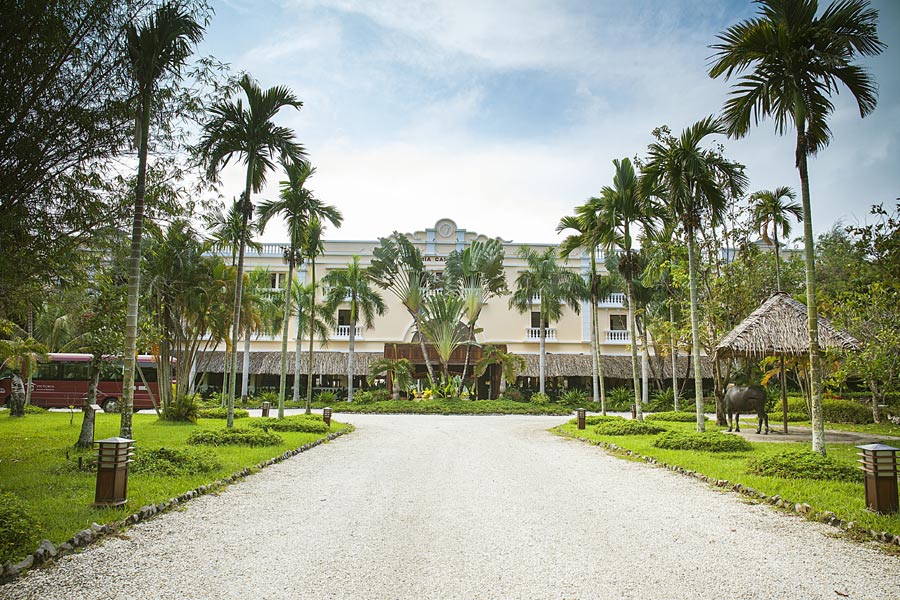
Victoria Can Tho Resort offers colonial-style accommodation slightly outside the center. Pool, spa, riverside setting. Comfortable but less interesting than Azerai.
Nam Bo Boutique Hotel is a solid mid-range option. Central location, clean rooms, helpful staff, good breakfast.
Some travelers stay in homestays, particularly around Ben Tre or Vinh Long. Quality varies significantly. We work with specific families we’ve vetted, but random homestays can disappoint.
Getting There
Can Tho is 170 kilometers from Ho Chi Minh City. The drive takes 3-4 hours on improved highways.
We arrange private transfers, which gives flexibility for stops along the way. You can visit Vinh Trang Pagoda or explore smaller towns en route.
Buses run frequently but make multiple stops. They’re cheap and reliable but add travel time.
Some travelers take the hydrofoil from Ho Chi Minh City to Vung Tau, then continue by road. This adds time without much benefit unless you’re specifically visiting Vung Tau.
When to Go
The delta has two seasons: dry (December-April) and wet (May-November). Both work, but differently.
Dry season offers easier travel, less rain, better cycling conditions. But the landscape is drier and less green.
Wet season brings afternoon rain, lusher scenery, and fewer tourists. Flooding occasionally affects some areas September-October, but main routes stay accessible.
Fruit season varies by type, but generally peaks March through June.
Planning Your Time
Two days minimum from Ho Chi Minh City: one night in Can Tho, early morning floating market, afternoon activities, return next day.
Three days allows deeper exploration: different markets, cycling tours, visits to more remote areas like Tra Su forest or the coast near Ca Mau.
Some itineraries continue from the delta to Phu Quoc Island or Cambodia (via Chau Doc). Both work logistically.
The Reality
The Mekong Delta isn’t spectacular in the way Ha Long Bay or Angkor are. There are no dramatic landscapes or architectural monuments. What it offers is cultural immersion and insight into rural Vietnamese life.
Many visitors expect something the delta doesn’t deliver. They want untouched nature or dramatic scenery. What they get is a working agricultural region where tourism is secondary to farming and fishing.
We send clients to the delta when they want to understand how most Vietnamese people actually live, when they’re interested in agriculture and river culture, or when they want a complete picture of Vietnam beyond the highlights.
Go with the right expectations and decent planning, and the delta rewards you with authenticity and access to daily life that’s increasingly hard to find elsewhere in Vietnam. Rush it or expect the wrong things, and it disappoints.
TOURS INCLUDE Mekong Delta

 14 DAYS
OTHER DESTINATIONS


What customers say about us
VIDEO TESTIMONIALS
Robert
 ITALY
ITALY
 2019
2019
 REQUEST A FREE QUOTE