Duong Lam
Duong Lam Village: Hanoi’s Ancient Neighbor
Duong Lam sits 50 kilometers west of Hanoi in Son Tay district. This is one of northern Vietnam’s few remaining ancient villages with original architecture largely intact: laterite houses from the 17th and 18th centuries, narrow lanes, communal spaces, and traditional village structure still functioning in the 21st century.
Vietnam recognized Duong Lam as a National Historic and Cultural Relic in 2006. The designation came with restrictions on development and requirements to preserve the village character. This saved Duong Lam from the concrete modernization that erased most traditional villages around Hanoi.
What Makes It Significant
The houses are the main draw. Built from laterite bricks (reddish-brown stone quarried locally), these structures use traditional construction without steel or modern materials. Curved tile roofs, wooden beams, interior courtyards, and carved details show craftsmanship from centuries past.
Many houses remain occupied by families who’ve lived there for generations. You’re walking through a functioning village, not an open-air museum. Children play in lanes, elderly residents sit in doorways, and daily life continues around visiting tourists.
The village layout follows traditional Vietnamese feng shui principles: banyan trees marking communal spaces, temples at specific orientations, houses arranged according to family hierarchy and social status.
Two Vietnamese kings were born in Duong Lam: Phung Hung (8th century) and Ngo Quyen (10th century). Their birth homes and memorial temples are part of the village tour circuit.
The Main Sites
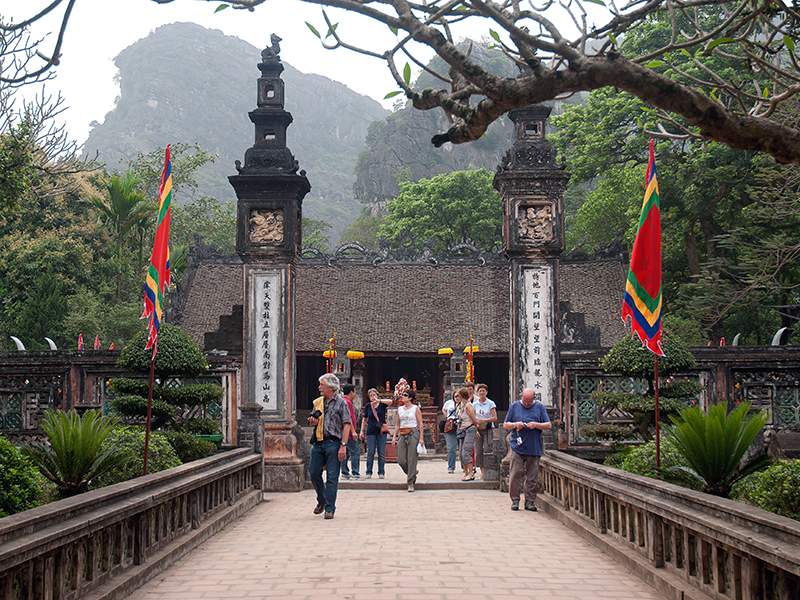
Mong Phu Communal House dates from the 17th century. This is the village meeting hall where important ceremonies and community decisions occurred. The architecture is impressive: carved wooden pillars, elaborate roof construction, and ceremonial objects still in use.
Mia Pagoda sits just outside the main village. Built in the 15th century, it contains dozens of terracotta and wooden statues, some remarkably well-preserved. The 287 statues show arhats (enlightened beings) in various poses and expressions. It’s one of northern Vietnam’s most important pagoda collections.
Phung Hung Temple honors the king born here. The temple is modest but historically significant. Local guides explain his role in Vietnamese resistance against Chinese rule.
The old laterite houses scattered throughout the village are the real attraction. Some families welcome visitors inside to see living conditions and traditional furniture. Others prefer privacy, which should be respected.
The banyan tree near the village center is reportedly over 300 years old. It’s the social hub where residents gather, kids play, and village life happens.
Village Life
Agriculture remains central. Rice paddies surround the village, worked using methods largely unchanged for generations. During planting and harvest seasons (May-June and September-October), you’ll see farmers in the fields.
Traditional crafts continue in some households: soy sauce production, rice wine distillation, and che lam (a traditional candy made from rice and ginger). Several houses produce che lam for sale. Watching the process and tasting fresh candy is part of most visits.
The pace is deliberately slow. This isn’t a place for rushing through photo stops. The value comes from walking narrow lanes, observing daily routines, and absorbing the atmosphere of a village that hasn’t fundamentally changed in centuries.
Visiting Practically
Hire a knowledgeable guide. The village looks pleasant without context, but understanding the architectural significance, family histories, and cultural practices transforms the experience.
We arrange guides who grew up in the area and have relationships with families in the village. They can arrange home visits and explain details that foreign visitors would never notice independently.
Dress modestly. You’ll likely visit temples and enter people’s homes. Shoulders and knees covered is appropriate.
The village is walkable. Expect 2-3 hours of gentle walking on uneven paths and lanes. Wear comfortable shoes.
Combining with Other Sites
Duong Lam works well combined with several nearby attractions for a full day trip from Hanoi.
Thay Pagoda (Master’s Pagoda) sits about 10 kilometers from Duong Lam against a limestone cliff. Built in the 11th century, it honors Buddhist master Tu Dao Hanh. The architecture blends into the rock face dramatically. Water puppet performances occur here during festivals.
Tay Phuong Pagoda sits on a hill with views across the Red River Delta. It contains 73 wooden statues from the 18th century, each carved with distinct features and expressions. The climb involves many steps but rewards with both art and views.
Van Phuc silk village specializes in silk weaving and is en route from Hanoi. You can see traditional looms operating and purchase silk products directly from workshops.
Where to Eat
Several village houses offer home-cooked meals. These are simple: rice, vegetables, perhaps chicken or fish, soup. The food isn’t fancy but it’s fresh, authentic, and gives you a reason to sit in a traditional house and talk with villagers.
Com lam (rice cooked in bamboo tubes) is a local specialty. Families prepare it specifically for visitors.
Some tours include lunch as part of the package. Otherwise, arrange meals through your guide who can recommend specific families.
Getting There
Duong Lam is 50 kilometers from central Hanoi. The drive takes 90 minutes to 2 hours depending on traffic leaving the city.
Private car is the practical option. We arrange drivers familiar with the route and can combine multiple sites into a day trip.
When to Go
The village is visitable year-round, but timing affects what you’ll see.
Harvest season (September-October and May-June) shows agricultural activity. Rice fields are golden or being worked.
Tet (Vietnamese New Year, late January or February) brings the village alive with festivals, family gatherings, and traditional celebrations. It’s culturally rich but also crowded with domestic visitors.
Weekdays are quieter than weekends. The village sees more domestic tourism on Saturdays and Sundays.
Weather-wise, October through April is more comfortable. May through September brings heat and occasional rain, but village lanes drain well and the greenery is lusher.
Planning Your Time
Half a day from Hanoi is minimum: 2 hours driving each way, 2-3 hours in the village. That’s rushed but workable if you have limited time.
A full day allows proper exploration of Duong Lam plus nearby pagodas or craft villages. This is the better option if you want depth rather than just checking boxes.
Some travelers stay overnight in village homestays. This gives you evening and early morning in the village when day-trippers are gone. The experience is more immersive but facilities are basic.
The Reality
Duong Lam isn’t dramatic. There are no spectacular views or monumental architecture. The appeal is subtle: the cumulative effect of walking streets that look essentially as they did 200 years ago, seeing houses still lived in by descendants of original builders, and experiencing village life that modernization hasn’t erased.
Tourism has obviously changed Duong Lam. Some houses now cater specifically to visitors. Che lam production has scaled up for tour groups. The village is increasingly conscious of its tourism value.
But compared to most of Vietnam, where ancient architecture has been demolished for concrete, Duong Lam preserved something rare. That preservation creates value even if it’s no longer completely “untouched.”
We send clients to Duong Lam who’ve expressed interest in traditional architecture, rural culture, or seeing Vietnam beyond the standard highlights. It appeals to travelers who can appreciate subtlety and who don’t need constant stimulation.
If you only have three or four days in northern Vietnam, prioritize Halong Bay or Sapa. But if you have a week or more, or if you specifically want to understand traditional Vietnamese village life, Duong Lam delivers that in ways few other accessible locations can.
This is quiet, understated cultural tourism. For the right travelers at the right time, that’s exactly what they’re looking for.
TOURS INCLUDE Duong Lam
OTHER DESTINATIONS



















What customers say about us
VIDEO TESTIMONIALS
Robert
 ITALY
ITALY
 2019
2019
 REQUEST A FREE QUOTE