Ban Gioc Waterfalls
Ban Gioc Waterfall: Vietnam’s Border Cascade
Ban Gioc sits on the border between Vietnam and China in Cao Bang Province, roughly 340 kilometers north of Hanoi. This is Vietnam’s largest waterfall and one of Asia’s largest transnational waterfalls: the Quay Son River drops 30 meters in three tiers, with the border running through the middle of the cascade. Half belongs to Vietnam, half to China (where it’s called Detian Falls). The result is spectacular: massive water volume, lush tropical setting, and karst mountains as backdrop.
Ban Gioc is remote, requiring genuine commitment to reach, but for travelers exploring northern Vietnam beyond the standard Sapa-Halong circuit, it delivers one of the country’s most impressive natural sites.
The Waterfall
The scale surprises most visitors. Ban Gioc isn’t a single narrow plunge but a broad curtain of water spreading roughly 200-300 meters across (depending on how you count the tiers). During peak flow (June-September after monsoon rains), the volume is tremendous: white water crashing over limestone shelves, spray rising, and the sound audible from kilometers away.
Three main tiers create the cascade. The upper section is narrower, then the water spreads across the middle tier (the most impressive section), before collecting in pools and continuing downstream. The limestone creates natural shelves and dividing points that fragment the water into multiple streams.
The border runs through the waterfall itself. Vietnamese visitors stay on the Vietnamese side viewing areas. Chinese tourists gather on their side. You’ll see both groups photographing the same waterfall from different angles, a surreal reminder of political boundaries cutting through natural features.
Bamboo rafts operate on the Vietnamese side, taking visitors close to the base of the falls. These are small rafts (holding 4-6 people plus operator) that paddle into the spray zone. It’s touristy but genuinely fun, getting you closer to the falls’ power and scale.
Nguom Ngao Cave
About 3 kilometers from Ban Gioc, this limestone cave system extends several kilometers underground. Only a section is developed for tourism with concrete walkways and lighting, but it’s extensive and impressive.
The cave contains multiple chambers with stalactites, stalagmites, and underground streams. The formations are genuinely beautiful: cathedral-like spaces, delicate mineral deposits, and dramatic lighting (though the colored lights are garish in places).
Entry costs 30,000 VND. Plan 45-60 minutes for walking through the developed section. Wear shoes with grip; the paths can be slippery from moisture and dripping water.
Most Ban Gioc visitors include Nguom Ngao Cave as part of the day, which makes sense given proximity and the quality of the formations.
The Border Atmosphere
The Vietnamese-Chinese border here has an interesting character. It’s officially controlled but feels relatively relaxed. Vietnamese vendors sell goods near the waterfall. Chinese day-trippers occasionally cross over (with permits) to the Vietnamese side for closer waterfall access.
You cannot cross casually as a tourist. The international border crossing at Friendship Pass (about 90 kilometers from Ban Gioc) is the official point for entry/exit between the countries.
But the borderland atmosphere adds interest: seeing both countries’ tourists photographing the same natural feature, noticing different tourism development approaches on each side, and understanding how natural geography ignores political boundaries.
Chinese development on their side (Detian Falls) is more extensive: larger viewing platforms, more facilities, and heavier visitor numbers. The Vietnamese side is less developed, which creates both benefits (more natural setting) and drawbacks (fewer facilities).
The Surrounding Landscape
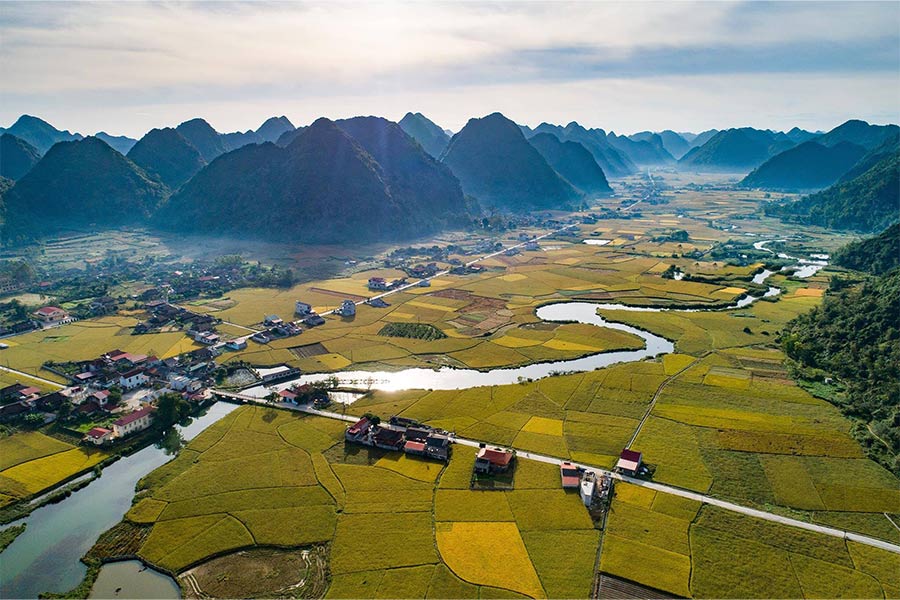
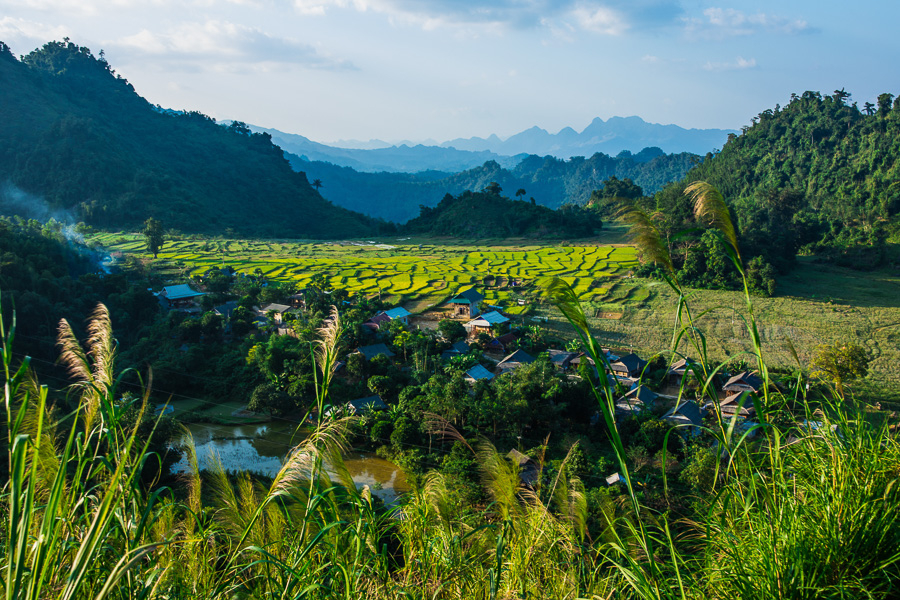
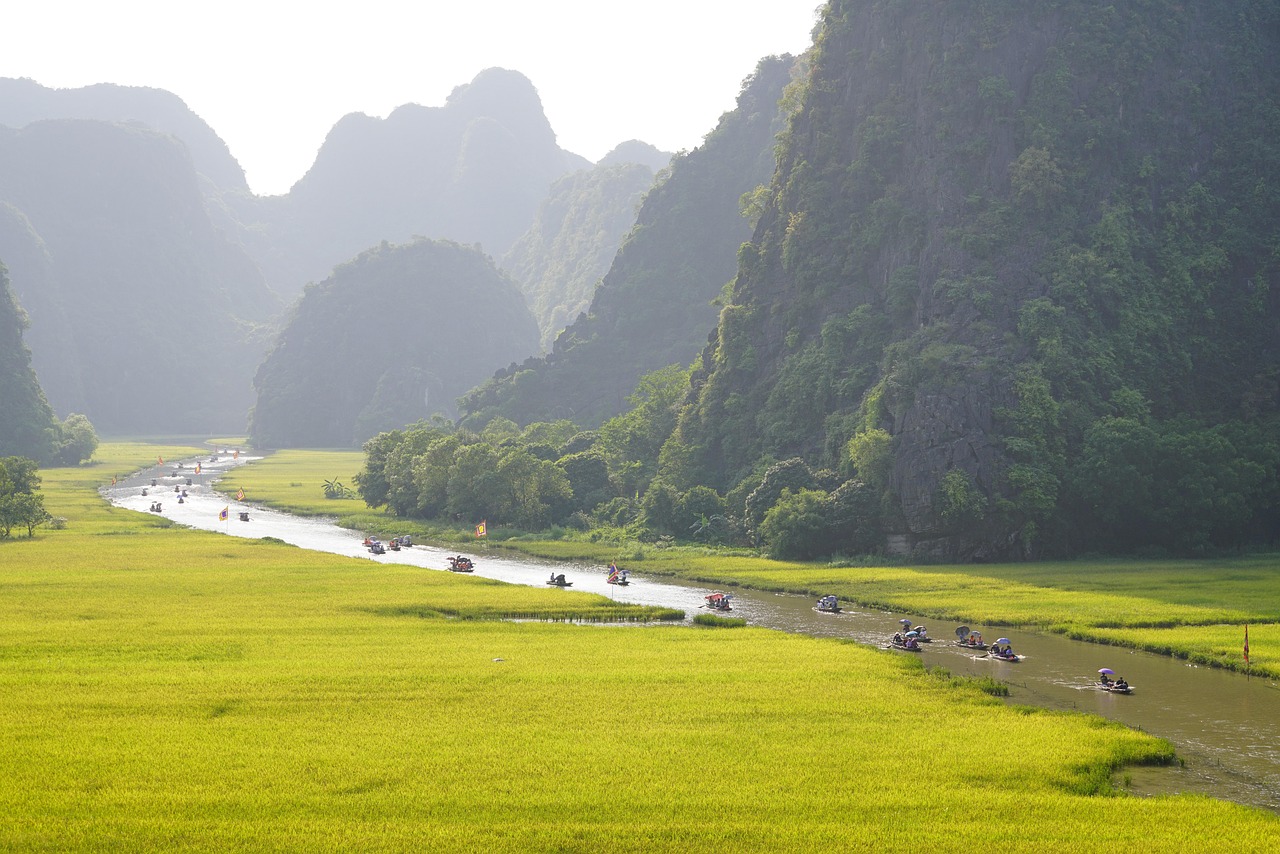
The drive to Ban Gioc passes through spectacular karst scenery. Limestone mountains rise from rice paddies and vegetable fields. The landscape resembles Ninh Binh or southern China’s Guilin region: dramatic peaks, rural valleys, and ethnic minority villages (primarily Tay, Nung, and Dao people).
The region near Ban Gioc contains numerous smaller waterfalls, caves, and scenic spots. If you have time, exploring beyond just Ban Gioc reveals Cao Bang Province’s broader natural beauty.
Several minority villages exist along the route. Visiting requires local guides and sensitivity. These communities see tourism but remain primarily agricultural. Respectful cultural exchange is possible, but random village visits without introduction can be intrusive.
Where to Stay
Most travelers stay in Cao Bang city (85 kilometers from the waterfall) as a base. Cao Bang is a small provincial capital with basic hotels adequate for overnight stops.
Saigon Ban Gioc Hotel near the waterfall offers the most convenient accommodation: simple rooms, restaurant, and location within walking distance of Ban Gioc. It’s basic but functional, eliminating the need for early morning drives from Cao Bang city.
Several homestays and guesthouses near the waterfall provide even more basic accommodation. Standards vary; book through verified operators rather than arriving without arrangements.
For travelers doing the northern loop (Hanoi-Ha Giang-Cao Bang-Ba Be Lake-Hanoi), Cao Bang city makes a logical overnight stop. The city itself isn’t particularly interesting, but it’s the practical base for reaching Ban Gioc.
Getting There
Ban Gioc’s remoteness is the main challenge. It sits in Vietnam’s far northeast, requiring either very long day trips or multi-day itineraries.
From Hanoi: Roughly 340 kilometers, taking 7-8 hours by road. This is too long for a comfortable day trip. Overnight in Cao Bang city is standard.
From Cao Bang city: 85 kilometers, about 2-2.5 hours to Ban Gioc. The road is paved and decent quality, winding through mountains with scenic views.
From Ha Giang or Dong Van: About 200 kilometers to Cao Bang city, taking 5-6 hours through mountains. This works for travelers doing the Ha Giang Loop and continuing east.
From Ba Be Lake: Roughly 170 kilometers to Cao Bang, about 4 hours. These two destinations combine logically in northern loop itineraries.
Private cars or motorbikes are the practical options. Public buses to Cao Bang exist from Hanoi, but onward transport to Ban Gioc requires hiring vehicles or joining local tours.
We arrange private drivers for clients building northern Vietnam itineraries. The flexibility allows stops at viewpoints, villages, and caves along the route without rigid schedules.
Motorbike touring works for experienced riders. The roads are manageable but require attention, particularly the mountain sections. The scenery rewards the effort.
When to Go
Water flow varies dramatically by season, fundamentally changing the experience.
June through September (Rainy season): Peak water flow. The waterfall is massive, loud, and impressive. This is when Ban Gioc looks most spectacular. Expect afternoon rain, which can be heavy. Roads stay passable but the landscape is lush and green.
October through January: Water flow remains good early in this period but decreases as dry season progresses. The surrounding landscape is less green but skies are clearer.
February through May (Late dry season): Water flow drops significantly. By April-May, Ban Gioc can be disappointingly small, with sections of the limestone shelf exposed and minimal water volume. The cascade loses its power. Only visit during this period if schedule allows no alternative.
Early morning visits offer better light and fewer crowds (though Ban Gioc never gets overwhelmingly crowded given its remoteness).
Combining Ban Gioc with Other Destinations
Ban Gioc works best as part of comprehensive northern Vietnam itineraries rather than as an isolated destination.
Ha Giang Loop + Ban Gioc + Ba Be Lake: This creates a northern circuit showing Vietnam’s most dramatic mountain landscapes, ethnic minority cultures, and natural sites. Plan 5-7 days minimum.
Cao Bang Province exploration: Beyond Ban Gioc, the province contains Pac Bo Cave (where Ho Chi Minh returned to Vietnam in 1941), additional waterfalls, caves, and minority villages. Spending 2-3 days exploring Cao Bang Province delivers depth most visitors miss.
Cross-border travel: The Friendship Pass allows overland travel between Vietnam and China. Some travelers use Ban Gioc as part of routes connecting Vietnam and southern China (Guangxi Province), though this requires proper visas and planning.
Planning Your Time
Minimum itinerary from Hanoi:
- Day 1: Hanoi to Cao Bang city (7-8 hours), overnight Cao Bang
- Day 2: Cao Bang to Ban Gioc (2-2.5 hours), visit waterfall and Nguom Ngao Cave (3-4 hours), return to Cao Bang or continue to Ba Be Lake
- Day 3: Cao Bang to Hanoi (7-8 hours) or continue northern circuit
This is rushed but workable for travelers with limited time who specifically want to see Ban Gioc.
Better approach: Build Ban Gioc into 5-7 day northern loop including Ha Giang, Ba Be Lake, or other destinations. This justifies the travel time and shows northern Vietnam’s full diversity.
What to Bring
- Cash for entrance fees, raft rides, food, and purchases. ATMs exist in Cao Bang city but not near the waterfall.
- Rain gear if visiting June-September. Afternoon storms are common.
- Sun protection regardless of season. The waterfall area has limited shade.
- Camera and protective bags. The spray zone near the waterfall can soak equipment.
- Snacks and water. Food options near Ban Gioc are limited to basic restaurants serving simple Vietnamese dishes.
The Reality
Ban Gioc is genuinely impressive, particularly during rainy season when water flow peaks. It’s one of Vietnam’s best natural sites and worth the journey for travelers who have time for comprehensive northern exploration.
But it’s remote. Getting there requires long drives through mountains, basic accommodation, and commitment to multi-day itineraries. This isn’t a casual day trip from Hanoi.
We recommend Ban Gioc to clients who’ve specifically requested northern Vietnam beyond Sapa and Halong Bay, who enjoy road travel through mountain scenery, and who have at least a week for northern region exploration.
The waterfall won’t disappoint during peak flow season. Just make sure you visit during the right months (June-September) when water volume justifies the journey. Arriving during late dry season when the cascade is reduced to streams trickling over exposed limestone makes the long journey feel wasted.
Time your visit properly, build it into logical multi-day northern itineraries, and prepare for basic facilities and long drives. Approached that way, Ban Gioc delivers one of Vietnam’s most spectacular natural experiences and access to one of the country’s most remote and beautiful regions.
Just understand you’re committing to genuine adventure travel in remote areas. That’s either exactly what you want or a deterrent depending on your travel style. Know which category you fall into before heading to Vietnam’s far northeast.
TOURS INCLUDE Ban Gioc Waterfalls







What customers say about us
 VIDEO TESTIMONIALS
Robert
 ITALY
ITALY
 2019
2019
 REQUEST A FREE QUOTE