Moc Chau
Moc Chau: Northern Vietnam’s Tea Plateau
Moc Chau sits in Son La Province, roughly 200 kilometers northwest of Hanoi at elevations between 900 and 1,050 meters. This highland plateau is Vietnam’s major tea and dairy production center: endless green tea plantations rolling across hills, dairy farms supplying milk to Hanoi, and temperate climate that feels completely different from the lowlands. While tourists flock to Sapa, Moc Chau remains primarily an agricultural region that sees Vietnamese visitors during specific seasons but stays off most international itineraries.
The Landscape
The plateau stretches for kilometers: gently rolling hills covered in tea bushes, pine forests, and dairy pastures. The scale is impressive. Unlike terraced rice paddies that define other highland regions, Moc Chau’s tea plantations create uniform green waves across the landscape.
The climate is temperate year-round, cooler than the delta and northern lowlands. December through February can actually get cold, with occasional frost. This elevation and climate made Moc Chau ideal for tea cultivation and dairy farming, both introduced during French colonial times and expanded significantly afterward.
Tea Plantations
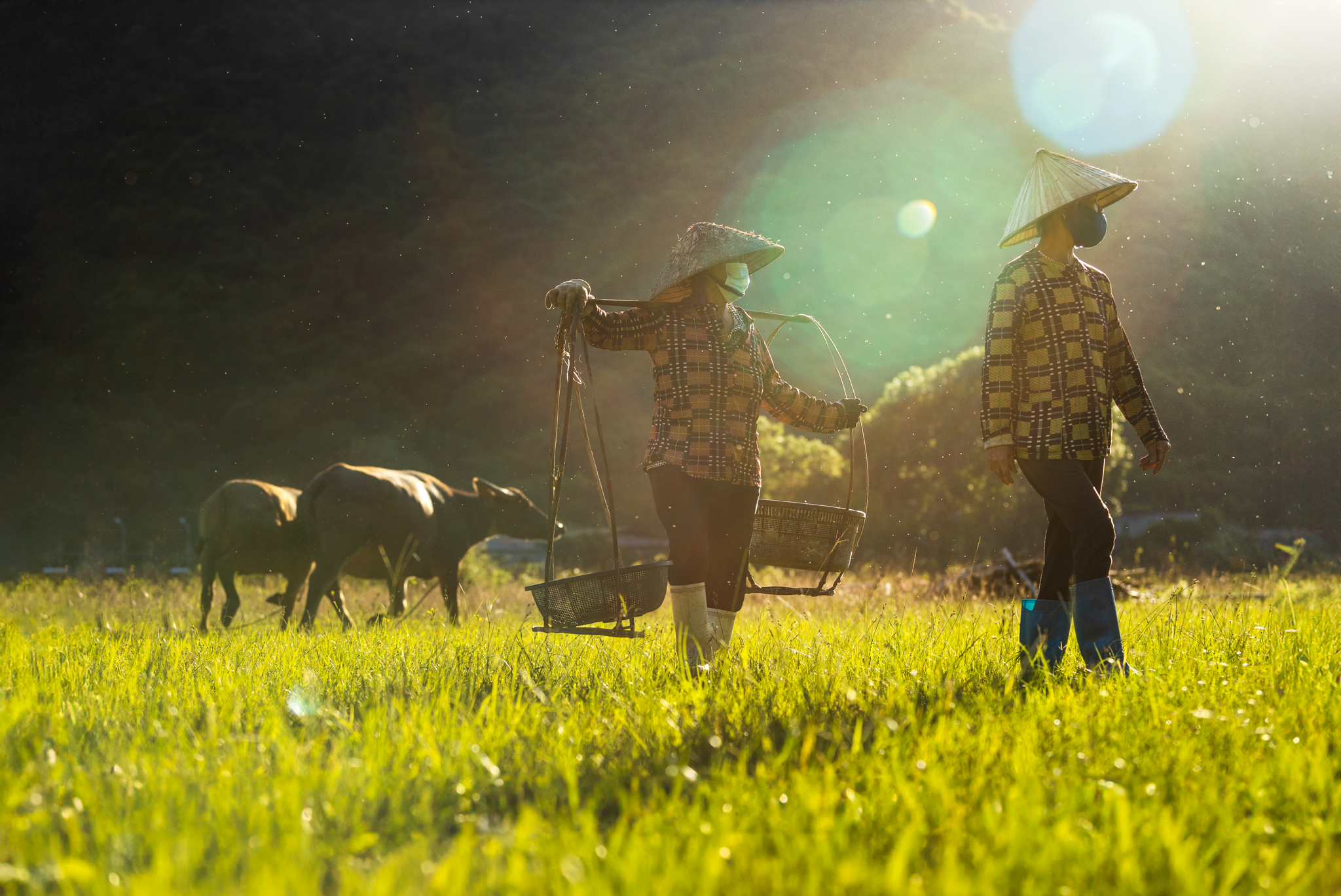
Moc Chau produces some of Vietnam’s best tea. Massive plantations employ thousands of workers, mostly ethnic minority women (primarily Thai and Hmong) who pick tea by hand throughout the year.
Visiting plantations during picking season shows the full operation. Women move through rows with baskets strapped to their backs, plucking young leaves with practiced efficiency. The work is repetitive and demanding but the visual of hundreds of workers spread across green hills is striking.
Several plantations welcome visitors: Moc Chau Tea Plantation is the largest and most accessible. You can walk through the tea fields, photograph workers (ask permission), and visit processing facilities where leaves are dried, rolled, and sorted.
The best light for photography is early morning when mist sits in valleys and workers begin picking. By late morning, the scene becomes harsh under direct sun.
Tea factories show industrial processing at scale. It’s less romantic than hand processing but reveals how Vietnam produces tea for domestic and export markets. Tours are informal; arrange through local guides or guesthouses.
Dairy Farms
Moc Chau supplies much of northern Vietnam’s fresh milk. Vinamilk and Moc Chau Milk both operate large dairy farms here. The landscape includes actual grazing cows, which is unusual in Vietnam where dairy isn’t traditional.
Some farms allow visits. You can see milking operations, learn about dairy production, and taste fresh milk and yogurt. It’s more interesting than it sounds, particularly for understanding how Vietnam adapted European agricultural practices to local conditions.
The dairy operations attract Vietnamese tourists who come for photo opportunities with cows and pastoral scenes. It’s slightly odd but harmless, and shows Vietnamese tourism tastes differ from Western expectations.
Seasonal Attractions
Moc Chau’s appeal varies dramatically by season. Vietnamese tourists time visits around specific blooming periods.
January-February: Plum blossoms and white mustard flowers bloom across the plateau. The plum orchards around Doi Cave turn white and pink. This is peak domestic tourist season. Hotels fill up, especially weekends.
March: Peach blossoms replace plum flowers. Still beautiful but less dramatic.
October-November: Buckwheat flowers bloom in some areas, though not as extensively as Ha Giang. The plateau turns pink and purple in patches.
April-September: No major flower seasons, so fewer tourists. The tea plantations are greenest after spring rains. This is actually excellent timing for international travelers who want to avoid Vietnamese tourist crowds.
Pha Luong Peak
The highest point in Moc Chau at 2,000 meters offers panoramic views across the plateau. The road to the summit is steep and winding but paved. At the top, you can see tea plantations stretching to distant mountains.
A large wind farm operates near the peak. The turbines aren’t beautiful but add scale to the landscape. Some visitors find them distracting; others appreciate the renewable energy aspect.
The summit gets cold and windy year-round. Bring layers even if the plateau is warm.
Dai Yem Waterfall
About 10 kilometers from Moc Chau town, this is the plateau’s most significant waterfall. It’s tall (over 100 meters) but often has limited water flow outside rainy season.
Visit during or after monsoon (June-October) for impressive water volume. Dry season sees it reduced to a trickle.
The approach involves steps down to viewing platforms. Swimming isn’t practical given the drop and current.
Ang Village and Minority Culture
Several Thai minority villages exist around Moc Chau. Ang Village is the most accessible, though tourism has obviously changed its character.
Traditional stilt houses still stand, though many families have built modern concrete homes nearby. You can visit households to see traditional weaving, taste local rice wine, and learn about Thai culture in the highlands.
As always with village tourism, approach respectfully. These are functioning communities, not museums. Going with a guide who has existing relationships makes the difference between intrusive photography session and genuine cultural exchange.
Where to Stay
Moc Chau town has basic hotels adequate for overnight stays: Moc Chau Arena Village, Moc Chau Ecolodge, and several smaller guesthouses offer clean rooms with hot water and WiFi.
Don’t expect luxury or sophisticated service. These are functional accommodations for domestic tourists and business travelers.
Moc Chau Highland Resort sits outside town in a more scenic location. Bungalows, decent restaurant, and views across tea plantations. It’s the best option in the area but still modest by resort standards.
Some homestays in minority villages offer basic accommodation. Standards vary dramatically. Only book these through verified operators or recommendations.
Son La city (60 kilometers north) has better hotel options if you’re touring the northwest region and just passing through Moc Chau.
Getting There
From Hanoi: 200 kilometers northwest, roughly 4-5 hours by road through mountains. The drive is scenic once you clear Hanoi’s outskirts.
Private car gives flexibility for stops and photography along the route. We arrange these for clients building northwest itineraries.
Buses run regularly from Hanoi’s My Dinh bus station to Moc Chau and Son La. They’re cheap (around 150,000 VND) but stop frequently and take 5-6 hours.
Moc Chau sits on the route between Hanoi and northwestern destinations like Mai Chau, Son La, or Dien Bien Phu. It works well as a stop on longer journeys rather than a standalone destination.
Motorbike touring is popular with Vietnamese riders. The roads are good, traffic is manageable outside Hanoi, and the plateau is perfect for cruising.
When to Go
January-February for plum blossoms if you want the full Vietnamese tourist experience. Just know it’s crowded and prices increase.
April-September for tea plantations without crowds. The landscape is greenest, operations are active, and you’ll have the plateau largely to yourself.
October-November for buckwheat flowers, though they’re less extensive than Ha Giang’s.
December-February can be quite cold, especially at night. Bring warm clothing if visiting during winter months.
Avoid weekends during flower seasons when domestic tourism peaks. Weekdays are dramatically quieter.
Planning Your Time
One night works as a break on longer northwest journeys. You’ll see the tea plantations, visit a waterfall or village, and continue the next day.
Two nights allows more thorough exploration: multiple plantations, Pha Luong peak, minority villages, and slower pace for photography and cycling.
Moc Chau doesn’t require extended time unless you’re deeply interested in tea production or want to use it as a base for exploring Son La Province.
Combining with Other Destinations
Mai Chau valley sits 100 kilometers southeast (about 2.5 hours). This combination works well: highland tea plateau followed by lowland rice valley, showing northern Vietnam’s diversity.
Son La city and prison (60 kilometers north) has historical significance from French colonial period and Vietnam War. Worth a stop if you’re interested in history.
Dien Bien Phu (200 kilometers northwest) is reachable but makes for a long day. Better to overnight in Son La midway.
Activities
Cycling through tea plantations and quiet roads works beautifully. The terrain is rolling but manageable. Rent bicycles in town (limited availability) or bring your own if touring by car.
Photography is the main activity, particularly during flower seasons. Early morning offers best light and mist in the valleys.
Trekking into surrounding mountains from minority villages provides access to more remote areas, though trails aren’t well-marked. Local guides are essential.
Simply driving slowly through the plateau, stopping at viewpoints and plantations spontaneously, captures Moc Chau’s appeal without rigid itineraries.
The Reality
Moc Chau isn’t dramatic or essential. The tea plantations are beautiful but not unique globally. The dairy farms are interesting but not compelling for extended time. The seasonal flowers attract Vietnamese tourists but may feel overhyped to international visitors.
What Moc Chau offers is pleasant highland scenery, agricultural tourism, and a break from Vietnam’s more intense destinations. It’s pastoral and peaceful rather than exciting.
We rarely send international clients to Moc Chau specifically. It works when building comprehensive northwest Vietnam itineraries that include Mai Chau, Son La, and Dien Bien Phu. As a standalone destination, it doesn’t justify the travel time from Hanoi.
But for travelers already touring the northwest, who appreciate agricultural landscapes, or who visit during plum blossom season and want that specific experience, Moc Chau adds variety and shows highland Vietnam that tourists in Sapa or Ha Giang don’t see.
It’s a working plateau that happens to be scenic rather than a scenic area developed for tourism. That distinction matters. If you want developed tourism with activities and infrastructure, go elsewhere. If you want to see where Vietnam’s tea and dairy come from, set against pleasant rolling hills, Moc Chau delivers exactly that.
Just adjust expectations appropriately. This is agricultural tourism, not adventure or cultural immersion. Know what you’re getting before committing the time to reach it.
TOURS INCLUDE Moc Chau

 10 DAYS

OTHER DESTINATIONS







What customers say about us
VIDEO TESTIMONIALS
Robert
 ITALY
ITALY
 2019
2019
 REQUEST A FREE QUOTE