Phonsavan
Phonsavan: Laos’s War-Scarred Plateau
Phonsavan sits in northeastern Laos at 1,200 meters elevation on the Xieng Khouang plateau, roughly 375 kilometers northeast of Vientiane and 450 kilometers from Luang Prabang. This small provincial capital exists primarily because the original town (Xieng Khouang) was destroyed during the Secret War. What draws travelers here isn’t Phonsavan itself but two things: the Plain of Jars, mysterious ancient stone vessels scattered across the landscape, and the region’s devastating war history. This is among the most heavily bombed places on earth, and that legacy shapes everything you see.
Understanding Phonsavan requires understanding the war. Between 1964 and 1973, the US conducted extensive bombing campaigns here targeting the Ho Chi Minh Trail and communist forces. The plateau was strategic, contested, and ultimately annihilated. An estimated 2 million tons of ordnance fell on Laos, much of it on Xieng Khouang Province. Cluster munitions left millions of unexploded bomblets (UXO) that still kill and maim people today. This history permeates the region in ways both visible and invisible.
The Plain of Jars
Scattered across the Xieng Khouang plateau are thousands of large stone jars, carved from solid rock and weighing up to 6 tons each. They date from roughly 500 BCE to 500 CE (Iron Age), though exact dating and purpose remain debated. The leading theory suggests they were used for burial practices, though local legends offer various explanations.
The jars are clustered in groups across numerous sites. Only a few are safely accessible to tourists due to UXO contamination in surrounding areas.
Site 1 (Thong Hai Hin): The largest and most visited site, containing over 250 jars. It’s the most developed with clear paths, viewing platforms, and facilities. The jars vary in size, with the largest reaching over 2 meters tall and weighing several tons. The site sits on a hillside offering views across the plateau. Entry costs around 15,000 kip (roughly $1.50 USD) and includes Sites 2 and 3 on a combination ticket.
Site 2 (Hai Hin Phu Salato): About 25 kilometers from Phonsavan, containing roughly 90 jars spread across two hilltops. This site sees fewer visitors and requires short uphill walks to reach the jar clusters. The setting is more peaceful and atmospheric than Site 1.
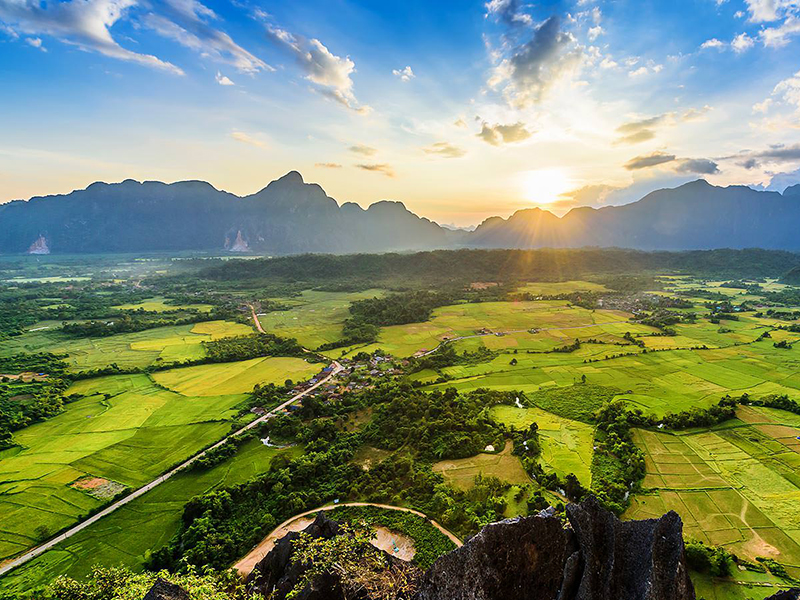
Site 3 (Hai Hin Lat Khai): The most scenic site, containing over 150 jars on a hillside with panoramic views. Rice paddies and villages spread below. This site combines archaeological interest with beautiful landscape photography opportunities.
Other sites: Over 90 jar sites exist across the province, but most remain inaccessible due to UXO contamination. Sites 4-7 have been recently cleared and opened, though they require guides and longer journeys. The remote sites see almost no tourists and offer more adventurous experiences for those with extra time.
The jars themselves are fascinating: how were they carved with primitive tools? How were multi-ton stones transported? Why are they here specifically? The mystery adds appeal, though the lack of definitive answers frustrates some visitors expecting more archaeological certainty.
Importantly: Stay on marked paths. Areas around the jar sites may still contain unexploded ordnance. The cleared sites are safe if you follow rules, but wandering off paths is genuinely dangerous.
The War Legacy
The Secret War’s impact is visible everywhere in Phonsavan. Bomb casings and war debris have been repurposed: as house supports, planters, restaurant decorations, and fencing. MAG (Mines Advisory Group) and other organizations continue clearing UXO decades after the war ended. People still die from explosions when they accidentally trigger old ordnance.
MAG Visitor Center: This small information center explains the UXO problem, shows types of ordnance found in Laos, and details clearance work. It’s sobering and essential for understanding the region’s context. Entry is free (donations encouraged). Spend 30-45 minutes here. It provides perspective that makes everything else you see in Phonsavan more meaningful.
Mulberry Farm Silk and UXO Survivors Farm: This social enterprise trains UXO accident survivors and employs people with disabilities, teaching silk production and providing income. You can visit the farm, see silk making, and purchase products directly supporting survivors. It’s genuine social enterprise, not tourist theater.
Old Xieng Khouang town ruins: The original provincial capital was completely destroyed by bombing. The ruins sit about 35 kilometers from Phonsavan. What remains are fragments of French colonial buildings, old That Foun stupa (partially restored), and scattered evidence of the town that was. It’s haunting and desolate, showing war’s physical erasure of communities.
Bomb craters, war relics, and trenches scatter across the landscape. Some have been turned into fish ponds. Others remain visible depressions in fields. The normalization of war debris in daily life is striking.
The Landscape
Beyond jars and war history, the Xieng Khouang plateau offers pleasant mountain scenery. Rolling hills, rice paddies, pine forests, and mountain views create attractive rural landscapes.
Villages around Phonsavan are primarily Lao Loum (lowland Lao) who resettled after the war, plus Hmong communities in higher elevations. The Hmong supported US forces during the war and faced persecution afterward, with many fleeing to Thailand and beyond. Those who remained maintain traditional practices: farming, weaving, and animist beliefs.
Visiting Hmong villages requires sensitivity. These communities dealt with tremendous upheaval and loss. Tourism provides some income but also brings outsiders into places with complicated painful histories. Go with local guides who have relationships with specific villages, approach respectfully, and understand you’re not entitled to photograph people or ceremonies without permission.
Phonsavan Town
The town itself is functional and somewhat bleak. It was built after the war to replace destroyed Xieng Khouang, so there’s minimal historical architecture or charm. Wide dusty streets, basic shophouses, guesthouses, and restaurants serving tourists and NGO workers comprise most of the center.
The morning market operates daily, selling produce, meat, and goods. It’s functional rather than touristy, worth walking through to see daily commerce.
Several restaurants serve decent Lao food and some Western dishes adapted for tourist palates. Nisha Restaurant does good Indian food. Bamboo Restaurant serves reliable Lao standards.
The town isn’t a destination itself. It’s a base for exploring the jars and understanding the war history.
Where to Stay
Phonsavan has limited accommodation, ranging from basic guesthouses to a few mid-range hotels.
Anoulack Khen Lao Hotel: The most established hotel in town. Clean rooms, hot water, WiFi, restaurant, and staff who arrange tours. It’s not exciting but reliable and the best option in Phonsavan.
Vansana Plain of Jars Hotel: Newer property outside town center. Modern rooms, better facilities than most options, pool. It’s more comfortable but less convenient for walking to restaurants.
Nice Guesthouse: Budget option with basic rooms ($10-15 USD). Clean enough, hot showers, friendly owners. Good for backpackers or budget travelers.
Kong Keo Guesthouse: Another budget choice, similar standards to Nice Guesthouse.
Don’t expect luxury or sophisticated service. Phonsavan serves adventure travelers, NGO workers, and war history tourists, not high-end tourism.
Getting There
Phonsavan’s remoteness and poor road connections make access challenging.
By bus from Vientiane: 375 kilometers, taking 10-12 hours on rough mountain roads. Buses are uncomfortable, slow, and exhausting. They typically run overnight, arriving early morning. Costs around 150,000-200,000 kip ($15-20 USD).
By bus from Luang Prabang: 450 kilometers, 10-12 hours, similarly rough roads. This is slightly more common route for tourists moving between Laos’s main attractions.
By air: Lao Airlines operates flights from Vientiane to Phonsavan (about 45 minutes). Service is limited (2-3 flights per week typically) and can be expensive ($100-150 USD), but eliminates the punishing overland journey. The small airport sits just outside town.
Private car or van: We arrange these for clients when building Laos itineraries. Private transport costs significantly more than buses but provides comfort, flexibility for stops, and eliminates overnight travel discomfort.
The roads are slowly improving but remain challenging. Expect winding mountain routes with limited pavement quality in sections.
When to Go
November through February: Cool and dry. Temperatures can drop surprisingly low at night (near freezing occasionally). Days are pleasant. This is the best season for visiting, with clear skies and comfortable conditions for exploring jar sites.
March through May: Hot and dry. Temperatures climb, dust is oppressive, and countryside dries out. Visibility decreases from agricultural burning. Acceptable but not ideal.
June through October: Rainy season. Afternoon storms, muddy roads, and occasional access problems. But the landscape is lush, tourist numbers are minimal, and rates drop. For flexible travelers who don’t mind rain, this works.
Planning Your Time
Minimum (2 days, 1 night):
- Day 1: Arrive Phonsavan, visit MAG Center, explore town
- Day 2: Morning jar sites (Sites 1-3), afternoon departure
This is rushed but workable for travelers with limited time.
Better approach (3 days, 2 nights):
- Day 1: Arrive, acclimatize, MAG Center, town exploration
- Day 2: Full day exploring jar sites including remote locations
- Day 3: Old Xieng Khouang ruins, Mulberry Farm, afternoon departure
This allows proper engagement with the sites and history without constant rushing.
What to Bring
Warm layers, especially November-February. Evenings and mornings are cold at elevation.
Sturdy shoes for jar sites. Paths are uneven, sometimes muddy.
Sun protection. The plateau is exposed with limited shade at jar sites.
Cash. ATMs exist in Phonsavan but can be unreliable. Many services require cash payment.
Respectful clothing for village visits. Long pants and shirts with sleeves.
Combining with Other Destinations
Phonsavan sits between Vientiane and Luang Prabang geographically but not conveniently given road conditions. Most travelers route:
Vientiane → Vang Vieng → Phonsavan → Luang Prabang: This creates logical northern Laos circuit, though it requires accepting long bus journeys or expensive flights.
Phonsavan to northern Vietnam: The border at Nam Can/Nong Het connects Phonsavan to Vietnam’s Thanh Hoa Province. Few tourists use this crossing, but it’s possible for adventurous overland travelers.
The Reality
Phonsavan is difficult. The access is punishing, accommodation is basic, the town lacks charm, and the history is deeply depressing. This isn’t comfortable tourism or pleasant sightseeing.
But the Plain of Jars is genuinely mysterious and archaeologically significant. And understanding what happened here during the Secret War—the scale of bombing, the ongoing UXO crisis, the communities destroyed and rebuilt—provides essential context for understanding Laos, Vietnam War history, and the human cost of conflict.
We recommend Phonsavan to clients who have significant time in Laos, who are interested in war history or archaeology, and who can handle rough travel and basic conditions. It’s not for everyone. But for travelers who engage seriously with difficult history and can appreciate archaeological mysteries despite discomfort, Phonsavan offers experiences unavailable elsewhere in Southeast Asia.
The jars themselves are worth seeing: tangible ancient mysteries that archaeologists still debate. The war legacy is confronting but important. And the plateau landscape, while not spectacular, has its own austere beauty.
Just understand you’re committing to challenging travel in remote areas with sobering history. That’s either exactly what you want or sufficient reason to focus your Laos time on more accessible, comfortable destinations. Know which category you fall into before booking those 12-hour bus rides to reach Phonsavan.
TOURS INCLUDE Phonsavan
OTHER DESTINATIONS

What customers say about us
VIDEO TESTIMONIALS
Robert
 ITALY
ITALY
 2019
2019
 REQUEST A FREE QUOTE