Pak Ou Cave
Pak Ou Caves: Sacred Cliffs Above the Mekong
Pak Ou Caves sit where the Nam Ou River meets the Mekong, about 25 kilometers upstream from Luang Prabang. Carved into sheer limestone cliffs above the water, these two caves house thousands of Buddha images left by pilgrims over centuries. Boats nose up to the riverbank below steep stone stairways leading into the dark, incense-scented interiors.
What draws travelers here isn’t just the caves themselves but the combination of setting, spirituality, and journey. The trip upriver offers classic Mekong scenery—jungle-clad hills, fishing boats, small riverside villages—while the caves provide a glimpse of living Buddhism rather than a frozen historical site. The atmosphere can be tranquil or crowded depending on timing, but the sense of ritual and continuity lingers beneath the tour groups.
The Caves
Pak Ou means “mouth of the Ou River,” a literal description of the location. The caves have served as sacred shrines for centuries—first to local animist deities, later to the Buddha as Buddhism spread through northern Laos. Today, they remain active pilgrimage sites where locals still bring offerings, especially during Lao New Year and major religious festivals.
There are two main caves:
Lower Cave (Tham Ting)
This is the first cave you reach from the river, perched just above the waterline.
- A wide opening flooded with daylight frames the Mekong outside.
- Inside, shelves, rock ledges, and makeshift altars are completely filled with Buddha statues—hundreds at first glance, then thousands as your eyes adjust.
- Most figures are small and darkened by age and candle smoke: seated Buddhas, standing Buddhas, calling-for-rain Buddhas, meditation poses.
- Many are simple wood carvings; others are lacquered or gilded. Some are broken or missing hands, but none are thrown away—damaged images are stored rather than destroyed, adding to the sense of dense accumulation.
This cave is open, atmospheric, and easy to explore in a few minutes, but taking time to look closely at the details—the variety of postures, the offerings, the wax drips and incense ashes—makes it more meaningful.
Upper Cave (Tham Theung)
A steep stairway of about 10–15 minutes leads from the lower cave to the upper cave entrance higher on the cliff.
- The upper cave is deep and genuinely dark. You will need a flashlight or phone torch.
- Once your eyes adjust, you’ll see more Buddhas scattered across rock formations and simple stone platforms.
- The air is cooler, the floor uneven and sometimes damp, and voices echo softly. It feels more cave than temple, more introspective than the busy lower chamber.
- The mood shifts dramatically if you enter when few others are around—dim light beams, the smell of incense, and flickering candles create a quiet, almost otherworldly feel.
Many visitors skip the upper cave or rush it. It rewards patience and silence; if you move slowly and turn off your light for a moment, you experience why this has been a place of retreat and worship for so long.
The Buddha Images
The Buddhas are the defining feature of Pak Ou. Over centuries, kings, monks, and ordinary villagers have brought statues here to make merit or to retire damaged household images respectfully.
- Most are small, hand-carved wooden Buddhas, often coated in lacquer or fading gold leaf.
- Styles vary, reflecting different periods and influences—some slender and graceful, others chunky and almost naive.
- Many show traditional Lao poses: calling for rain, meditation, “subduing Mara,” calling the earth to witness.
- New offerings still appear among the older images—modern small plastic Buddhas, incense sticks, flowers, and banknote donations.
There is no master label, no museum-style explanations, and little attempt at curation. That lack of interpretation frustrates some travelers who crave clear history but also preserves a sense of organic, evolving devotion.
The Journey There
Reaching Pak Ou Caves is half the experience.
By boat from Luang Prabang
This is the classic and most atmospheric approach.
- The trip upriver takes about 1.5–2 hours each way in a slow boat, depending on water levels and vessel.
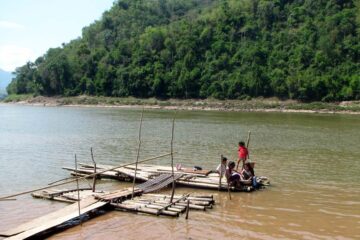
- You sit low to the water in narrow wooden boats, passing forested hills, fishermen throwing nets, kids playing on sandbanks, and small riverside temples.
- Many tours stop at a “whisky village” (Ban Xang Hai) en route, where locals produce Lao rice whisky and sell souvenir bottles infused with snakes or scorpions, along with textiles and handicrafts. It’s commercial but can be interesting if you haven’t seen local distilling before.
Returning downstream is faster, and the late-afternoon light on the Mekong can be stunning. On busy days, expect multiple boats moored along the riverbank at the caves, with a bit of a scramble up from the water.
By road + short boat crossing
For those short on time or prone to seasickness, it’s possible to drive near the caves and take a brief river crossing by local ferry or small boat.
- This cuts travel time significantly but loses much of the river journey’s appeal.
- You arrive at a small landing across from the caves, cross, climb to the lower cave, and reverse the route.
If you only care about “seeing” the caves and not the river experience, this works, but most travelers find the longer boat ride worth it.
The Setting
Pak Ou’s setting is one of limestone cliffs rising straight from the Mekong, with the smaller Nam Ou merging alongside. The caves open like dark mouths in the cliff face, framed by jungle and water.
- From the lower cave, you step out and look directly across the wide Mekong to forested hills and occasional smoke from small village fires.
- In the dry season, sandbars and rocky shelves appear along the river; in the wet season, the water swells almost to the cave steps.
- The soundscape is constant: river lapping, boat engines, birds in the trees, murmured conversations, occasionally chanting if a group of monks is visiting.
The landscape is not dramatic in a towering-mountain sense, but it’s quintessential northern Laos—green, layered hills, broad muddy river, misty horizons.
Spiritual and Cultural Context
Pak Ou Caves are not an ancient ruin in the Western sense; they are part of a living religious landscape.
- Historically, these caves likely hosted animist rituals before Buddhism’s arrival. Shrines to local spirits would have used the same dramatic natural spaces.
- As Theravada Buddhism spread, the caves became places to enshrine Buddha images, especially during the rule of the Lan Xang kingdom. Some Lao kings are said to have visited to pay homage.
- Today, local people still visit during key festivals: Lao New Year (Pi Mai), Buddhist Lent, and other holy days. Offerings of incense, flowers, candles, and small Buddhas continue the tradition.
When you visit, you’re stepping into a site with layered belief systems: nature worship, spirit veneration, and formal Buddhist practice all coexist here.
Practicalities at the Caves
Tickets and access
- There is an entrance fee collected near the boat landing or at the top of the river stairs, typically modest but subject to periodic change.
- You pay separately for the boat from Luang Prabang (via tour, private hire, or shared boat) and for the cave entrance.
Time on site
- Most tours give you 45–60 minutes at the caves. This is just enough to see both caves quickly, but a bit rushed if you like to photograph or sit quietly.
- If you hire a private boat, you can negotiate more time; plan for at least 1.5 hours to explore without hurry.
Facilities
- Basic toilets are available near the landing and at the cave entrance area, sometimes for a small fee.
- A few simple stalls sell drinks, snacks, and basic souvenirs. There’s not much else in the immediate area.
Safety and Etiquette
There is no war-era UXO hazard here like in Phonsavan, but there are other practical considerations.
- Stairs: The paths and steps can be steep, uneven, and slippery in the rain. Good footwear is important.
- Darkness: The upper cave is genuinely dark. Carry a flashlight or use your phone; watch your footing on rocky, irregular surfaces.
- Riverboats: Boats are simple and usually lack life jackets, though some operators now provide them. River conditions are generally calm near Luang Prabang but take normal caution boarding and disembarking.
Culturally, this is a living religious place, not a theme park.
- Dress modestly: shoulders and knees covered is respectful.
- Remove hats inside the cave shrines.
- Move quietly; avoid loud conversations and speakerphones.
- Ask before photographing monks or close-ups of people praying.
- Don’t touch or rearrange Buddha images, even if they look dusty or poorly placed.
When to Go
Northern Laos is strongly seasonal, and Pak Ou’s experience changes with weather, water levels, and visitor numbers.
November through February: Cool, dry, and clear
- This is the best overall period: comfortable temperatures, low humidity, and blue skies.
- The river is usually at moderate levels, and visibility is good for photos.
- It’s also high tourist season, so mornings and mid-days can be crowded with tour groups.
March through May: Hot and hazy
- Heat builds, and agricultural burning in the region often creates haze and poor air quality.
- Boat rides become sweaty, and views are muted by smoke.
- The caves themselves are cooler than outside, but the overall experience is less visually impressive.
June through October: Rainy season
- Rivers rise, currents strengthen somewhat, and afternoon storms are common.
- The landscape turns lush green, skies can be dramatic, and there are fewer tourists.
- Boat journeys may be interrupted by heavy rain, and boarding can be trickier on wet, muddy banks. Flexibility is important.
For fewer crowds, early morning departures from Luang Prabang or late-afternoon visits are best, though many operators prefer mid-morning to early afternoon schedules.
Planning Your Time
Minimum (half-day):
Most travelers do Pak Ou as a half-day trip from Luang Prabang.
- Morning: Depart by slow boat, optional stop at whisky village, visit both caves, return by early afternoon.
- Afternoon: Reverse schedule with sunset light on the way back.
This fits easily into a standard Luang Prabang stay and still leaves time for temples and town exploration.
Extended (full day with extras):
To make more of the area:
- Combine Pak Ou Caves in the morning with village visits or cycling on the outskirts of Luang Prabang in the afternoon.
- Alternatively, pair Pak Ou with another nearby attraction (such as a weaving village or a short hike) arranged via local guide.
You don’t need more than a few hours at the caves themselves, but combining them with river or countryside activities builds a more rounded day.
What to Bring
- Modest clothing: Lightweight but covering shoulders and knees.
- Good footwear: Sandals with grip or walking shoes for wet, uneven stairs.
- Light source: Phone torch or small flashlight for the upper cave.
- Water and sun protection: Hat, sunscreen, and water bottle for the boat ride and waiting at the docks.
- Small cash: For entrance fees, drinks, snacks, and small handicraft purchases in the whisky village or at the landing.
- Rain layer (wet season): Lightweight waterproof jacket or poncho, plus a dry bag or plastic protection for phone and camera.
Combining with Other Destinations
Pak Ou Caves are a classic add-on to a Luang Prabang itinerary rather than a standalone destination.
Most travelers base themselves in Luang Prabang and then:
- Do Pak Ou Caves + whisky village as a half-day river excursion.
- Combine with Kuang Si Falls on another day, creating two complementary outings: one river-focused, one jungle and waterfalls.
- Include local village visits (weaving, paper-making, rice farming) arranged by ethical local operators to support rural communities.
You rarely need to reorganize a broader Laos itinerary to include Pak Ou—if you’re in Luang Prabang for a few days, you can almost always fit it in.
The Reality
Pak Ou Caves are easy compared to somewhere like Phonsavan. Access is simple, the journey is scenic rather than punishing, and facilities, while basic, are adequate. You won’t be grappling with traumatic war history; instead, you’ll be in a place of quiet, ongoing devotion.
Expect, however, some compromises:
- The site can feel crowded and touristic during peak hours, especially when multiple boats arrive at once.
- Interpretation is minimal—there are few signs or detailed explanations, so context comes mostly from your guide or your own research.
- The caves themselves are small; if you arrive expecting enormous caverns or dramatic formations, you may be underwhelmed.
What Pak Ou offers, when taken on its own terms, is a layered experience:
- A slow journey on one of Asia’s great rivers.
- A sacred space where local worship quietly continues beneath tourist traffic.
- A visual impression of hundreds upon hundreds of Buddhas slowly accumulating over generations.
For travelers who value atmosphere, river landscapes, and glimpses of living religious practice, Pak Ou Caves are a worthy part of a Luang Prabang stay. If you are short on time, allergic to crowds, or uninterested in temples and spiritual sites, you might prioritize other experiences—like wandering Luang Prabang’s old town or visiting Kuang Si Falls instead.
As with many places in Laos, understanding what you’re coming for is key. If you approach Pak Ou as a simple but evocative river pilgrimage—a modest cave complex layered with faith rather than a grand spectacle—you’re more likely to appreciate what makes it special.
TOURS INCLUDE Pak Ou Cave
 10 DAYS
What customers say about us
VIDEO TESTIMONIALS
Robert
 ITALY
ITALY
 2019
2019
 REQUEST A FREE QUOTE