Don Khong
Don Khong Island: Sleepy Mekong Life
Don Khong is the largest island in the Mekong River, situated in southern Laos in Si Phan Don (the “Four Thousand Islands” region). The island stretches about 16 kilometers long and 8 kilometers wide, creating a substantial piece of territory in the middle of the river. It sits roughly 240 kilometers south of Pakse, the main city in the region, accessible by a combination of boat and road.
What draws travelers to Don Khong is not dramatic scenery, archaeological significance, or cultural spectacles. Instead, it offers something increasingly rare in Southeast Asia: genuine slowness. The island has no cars, minimal electricity in many areas, basic guesthouses, and a rhythm governed by the Mekong’s currents and the daily routines of fishing families, rice farmers, and monks. The experience is deliberately low-key, atmospheric, and suited to travelers seeking escape rather than stimulation.
Don Khong is not for everyone. It lacks the energy of tourist hubs, offers limited amenities, and requires comfort with basic conditions and slow travel. But for those seeking to experience the Mekong as a lived landscape rather than a backdrop, and who value quiet observation over curated experiences, Don Khong offers something genuine.
Geography and Access
Don Khong sits in the Mekong’s broadest section, where the river spreads into a network of islands, channels, and shallow areas. The “Four Thousand Islands” region (Si Phan Don) technically includes thousands of small islands, though most are tiny, unpopulated, or seasonally submerged.
From Pakse (the main regional hub)
Most travelers arrive in Pakse first, either by bus from Vientiane or other Lao cities, or by flying into Pakse’s small airport.
- From Pakse, it’s about 60 kilometers south to Don Khong.
- The journey typically involves: minibus or shared taxi to a river town (usually Ban Nakasang or similar), then a boat crossing to Don Khong.
- Total travel time from Pakse is 2–3 hours depending on connections and water levels.
- Costs are modest: roughly $5–10 USD for transport plus $2–5 USD for the boat crossing.
From Thailand
Some travelers enter from Thailand, crossing at Ubon Ratchathani and accessing Don Khong from the Thai side of the Mekong. This route is less common and requires more complex arrangements but is possible for those already in Thailand’s northeast.
On the island
There are no vehicles on Don Khong itself. Travel is by foot, bicycle, or boat.
- You can rent bicycles through guesthouses (very cheap, $1–2 USD per day).
- Walking is feasible; the main settlements are concentrated and distances are manageable.
- Long-tail boats can be arranged for trips to nearby islands or along the shoreline.
The Island Itself
Don Khong is not mountainous, dramatic, or packed with attractions. It is, however, genuinely peaceful in a way that rewards observation and slowness.
The landscape
The island is flat to gently rolling, covered mostly with palm trees, fruit orchards, rice paddies, and scattered villages. The vegetation is lush and tropical, especially in the wet season.
- The Mekong surrounds the island on all sides, creating a sense of separation from the mainland.
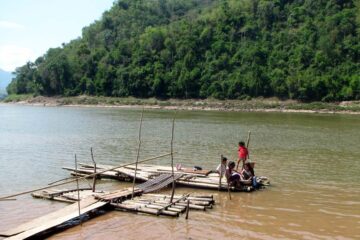
- The water is broad and muddy, lined with fishing boats, water buffalo, and occasionally fishermen standing in dugout canoes or wading with nets.
- The shoreline alternates between small sandy beaches, rocky outcrops, and gentle banks where palm trees overhang the water.
The overall mood is rural and agrarian. You see subsistence farming, small-scale fishing, and village routines rather than tourist infrastructure.
Main settlements
The largest village, Muang Khong, sits on the western shore facing the Thai bank. It has the most guesthouses, restaurants, and basic shops. Despite being the “main town,” it consists of a few streets of low buildings and shops, with most residents living in residential areas away from the small commercial center.
Smaller villages and hamlets scatter around the island: Ban Khone, Ban Hang Khong, and others, each with a few houses, a small school, maybe a wat (temple). These settlements feel genuinely removed from tourism.
Daily life
If you spend time observing, you’ll see:
- Fishing boats departing at dawn and returning mid-morning with modest catches.
- Water buffalo wallowing in the shallows and women washing clothes at the water’s edge.
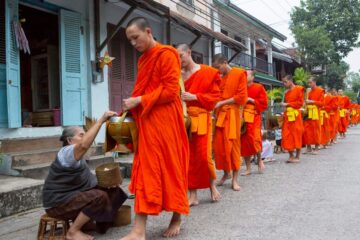
- Monks in saffron robes walking barefoot through villages for morning alms.
- Children playing in the river, swimming and wading with casual fearlessness.
- Families eating evening meals on wooden platforms overlooking the water.
- Evenings that grow very dark and very quiet once the sun sets, with stars visible and the sound of insects and water prominent.
This is not theater or performance for tourists. It’s how people actually live here.
What to Do (or Rather, What Not to Do)
Don Khong’s appeal lies partly in the absence of “things to do” in the conventional tourist sense. The experience is about being present, moving slowly, and observing.
Watching the river
Spending time on the riverbank or on a boat watching the Mekong flow is the primary activity. The river is constantly changing: light shifts throughout the day, boats pass, water levels fluctuate seasonally, and the opposite bank (Thailand) is always visible.
- Sunrise on the river is stunning—mist clears, light turns golden, and birds become active.
- Sunset brings dramatic sky colors reflected on the water.
- Midday is hot and slow; many locals rest during these hours, and the rhythm feels completely different.
Sit on a guesthouse porch, take a slow bicycle ride along riverside paths, or rent a boat for an hour and drift with the current. The activity is minimal; the experience is about attunement to place and rhythm.
Bicycle exploration
Renting a bicycle and riding slowly around the island reveals the landscape in a way walking or motorized transport cannot.
- You can cover the main roads in a few hours, passing through villages, past rice paddies, and along the shoreline.
- The pace allows for stopping, chatting with locals, photographing, and just absorbing the environment.
- Side paths lead to smaller hamlets and more remote areas; getting lost is part of the experience and usually results in interesting encounters.
Temple visits
Don Khong has several wats (Buddhist temples), modest in scale but genuine places of worship rather than tourist sites.
- Wat Khong Kham is the main temple in Muang Khong, with a stupa and active monastic community. It’s open to visitors; remove shoes and dress modestly.
- Smaller temples are scattered across the island, less visited and more integrated into village life.
- Visiting during early morning alms rounds (before 7 AM) offers a chance to see monks and villagers engaged in daily religious practice.
Village interactions
Don Khong’s primary “attraction” is its people and their daily lives. This requires genuine respect and appropriate approaches.
- Simply being present in villages, making eye contact, and greeting people (“Sabaidee”) often leads to conversations.
- Some guesthouses can arrange visits to family homes for meals or to see traditional fishing or farming methods, but this should be done through established relationships, not as a tourism transaction.
- Be cautious about treating people as photo subjects. Ask before photographing, especially of children, elders, or religious activities.
Fishing and food
Many guesthouses can arrange a morning or evening boat trip to watch or participate in fishing. This offers insight into the river economy and is genuinely atmospheric.
- Early morning trips catch the activity of fishermen setting nets or using traditional methods.
- Evening trips may include dinner featuring the day’s catch, prepared simply and eaten on a boat or riverbank.
Nearby islands
The broader Si Phan Don region includes other islands and notable sites (like the Khone Phapeng waterfall further south), but these require boat trips and are increasingly touristy. Most travelers focus on Don Khong itself unless they have significant time.
Accommodation and Eating
Don Khong’s accommodation is uniformly basic. There are no mid-range hotels or resorts, only guesthouses.
Guesthouses
- Most are simple wooden structures with basic rooms: a bed, perhaps a fan, shared or private bathroom with bucket shower or basic plumbing.
- Popular options include Pon’s Guesthouse (central, good restaurant), Sala Don Khong (riverside, quiet), and Khong Guesthouse (budget-friendly, local feel).
Electricity is typically available in guesthouses but may be limited in hours in some places. WiFi is available in some establishments but can be slow or unreliable. This is not a hardship for most visitors; it’s part of the experience.
Eating
Food on Don Khong is simple: sticky rice, fish, vegetables, and basic curries. Most guesthouses have attached restaurants serving similar menus.
- Breakfast is typically sticky rice with eggs, or sometimes bread and jam (colonial legacy).
- Lunch and dinner feature local fish (fresh from the morning catch), bamboo shoots, morning glory, and other vegetables.
- Prices are very cheap: a meal with rice and fish costs $1–2 USD.
There are no sophisticated restaurants or tourist-oriented menus. You eat what the island produces, prepared as locals eat it. This is either appealing (fresh, authentic, cheap) or limiting (no choices, unfamiliar preparations) depending on your perspective.
Drinking and socializing
Evenings often involve sitting with other travelers at guesthouse patios, watching the river darken. Many guesthouses stock basic beers, soft drinks, and whisky. The atmosphere is slow and conversational, not party-oriented.
Some guesthouses arrange dinners on boats or group fishing trips, creating informal social events that emerge naturally from shared accommodation rather than packaged activities.
Practicalities
When to go
November through February: Cool and dry
This is the best season: temperatures are pleasant (20–25°C mornings), humidity is moderate, and the river is calm. The landscape is greener than in the dry season. Tourism is at its peak, but Don Khong remains quiet compared to major tourist destinations.
March through May: Hot and dry
Heat builds significantly. Water levels drop, and the river becomes shallower and more sluggish. The landscape dries out, vegetation fades, and dust increases. It’s less visually appealing but still functional. Fewer tourists arrive.
June through October: Rainy season
Afternoon and evening storms are common; the river swells and becomes more turbulent. Travel can be unpredictable, and some boat trips may be cancelled. The landscape is lush, but the experience involves dealing with rain. Tourism drops significantly, and rates fall.
The cool season (November–February) is ideal for comfort and visibility, but you’ll encounter more travelers. The shoulder seasons work if you’re flexible with weather.
How long to stay
This is highly personal and depends on your relationship with slowness and observation.
- 2 days (1 night): Allows you to arrive, rest, take a morning river activity or bicycle ride, and depart. It’s enough to experience the island’s rhythm without fatigue.
- 3–4 days: Ideal. You have time to settle in, explore the island thoroughly, take a boat trip, visit temples, and simply sit and observe without rushing.
- 5+ days: Diminishing returns for most travelers unless you’re genuinely embracing slow travel and want deep integration into island life.
Many travelers initially plan 2 days and extend to 3–4 because the pace is restorative and the environment grows more interesting the longer you’re present.
What to bring
- Light, modest clothing: Shorts and t-shirts are fine for daily wear, but cover shoulders and knees for temple visits.
- Sun protection: Hat, sunscreen, sunglasses. The sun reflects off water intensely.
- Insect repellent: Mosquitoes are present, especially near water and during dusk. They’re not overwhelming but warrant protection.
- Cash: Don’t expect ATMs or card acceptance except possibly in the main guesthouse area. Bring sufficient cash, preferably in Lao kip.
- Basic medications: Pharmacies are minimal; bring any medications you need.
- Loose, breathable clothing: Heat and humidity can be intense; comfort matters.
- A book or journal: Download entertainment or bring something to read. WiFi is spotty, and quiet evenings reward reflection.
Combining with Other Destinations
Don Khong sits in southern Laos, relatively isolated from other major tourist sites.
From Pakse:
Pakse is the main hub for southern Laos. You can combine Don Khong with:
- The Bolaven Plateau: A highland region east of Pakse with waterfalls, coffee plantations, and cooler climate. A 1–2 day trip from Pakse before heading to Don Khong.
- Attapeu and the far south: Remote, underdeveloped areas for adventurous travelers, requiring significant time.
Broader Laos itineraries:
Don Khong is usually either:
- A destination in itself (arrive Pakse, go to Don Khong, explore the island, depart after 3–4 days).
- The final stop in a broader Laos journey (Vientiane → Luang Prabang → Pakse region → Don Khong, then flying out of Pakse).
Few travelers combine it with Thai or Cambodian destinations unless they have significant time.
The Reality: What to Expect
Don Khong is not a destination for those seeking activity, comfort, or concentrated attractions. It’s a destination for those seeking the opposite: slowness, authenticity, and the experience of a place lived in rather than performed for tourists.
What you get:
- A genuine slice of rural Lao life on the Mekong, largely unfiltered for tourism.
- Stunning river landscapes and the experience of water as central to daily existence.
- Extreme quietness, especially at night, which can be profoundly restorative or disquieting depending on your relationship with silence.
- Meals made from what the island produces, eaten simply and cheaply.
- The sense of being removed from tourist flows and mainstream travel routes.
- A pace that forces settling in and observation rather than rushing between sites.
What you don’t get:
- Comfort or modern amenities. Basic guesthouses, bucket showers, and limited electricity are standard.
- Curated cultural experiences. There are no “ethnic village tours” or staged performances.
- Sophisticated dining or nightlife. Food is simple, and evenings are quiet.
- Dramatic scenery or remarkable landmarks. The island’s appeal is atmospheric and gradual.
- Reliable technology. WiFi and electricity may be inconsistent.
Who should go:
- Travelers seeking escape from tourist infrastructure and interested in how people actually live.
- Those drawn to river landscapes and comfortable with observation as a primary activity.
- Backpackers, gap-year travelers, and slow travelers comfortable with basic conditions.
- People interested in Southeast Asian rural life and willing to engage respectfully with communities.
Who should reconsider:
- Those needing comfort, modern facilities, or reliable utilities.
- Travelers uncomfortable with limited dining options or uncertain food preparation.
- People requiring activities or entertainment beyond observation and walking.
- Those uninterested in villages, fishing, rice paddies, or river-based life.
The experience in practice:
A typical Don Khong day might unfold like this: wake early, take a boat to watch fishermen, return for a simple breakfast of sticky rice and eggs. Rent a bicycle and ride through villages, stopping to chat with a woman selling fruit or watch children play. Lunch of fresh fish and vegetables. Afternoon nap in the heat. Late afternoon, sit on a guesthouse porch watching the river light change. Evening meal of river fish and whisky with other travelers. Early sleep as darkness falls completely.
This is not stimulating in a conventional tourist sense. It’s atmospheric, meditative, and increasingly rare in a world of optimized travel experiences. If that appeals to you, Don Khong rewards patience and presence. If you need entertainment and activity, you’ll find the island boring.
Don Khong is one of the few places in mainstream Southeast Asia where you can genuinely experience the Mekong as a lived reality rather than a scenic backdrop. That’s its true value, and why travelers who connect with it often return mentally long after leaving.
TOURS INCLUDE Don Khong
 10 DAYS
OTHER DESTINATIONS
What customers say about us
VIDEO TESTIMONIALS
Robert
 ITALY
ITALY
 2019
2019
 REQUEST A FREE QUOTE